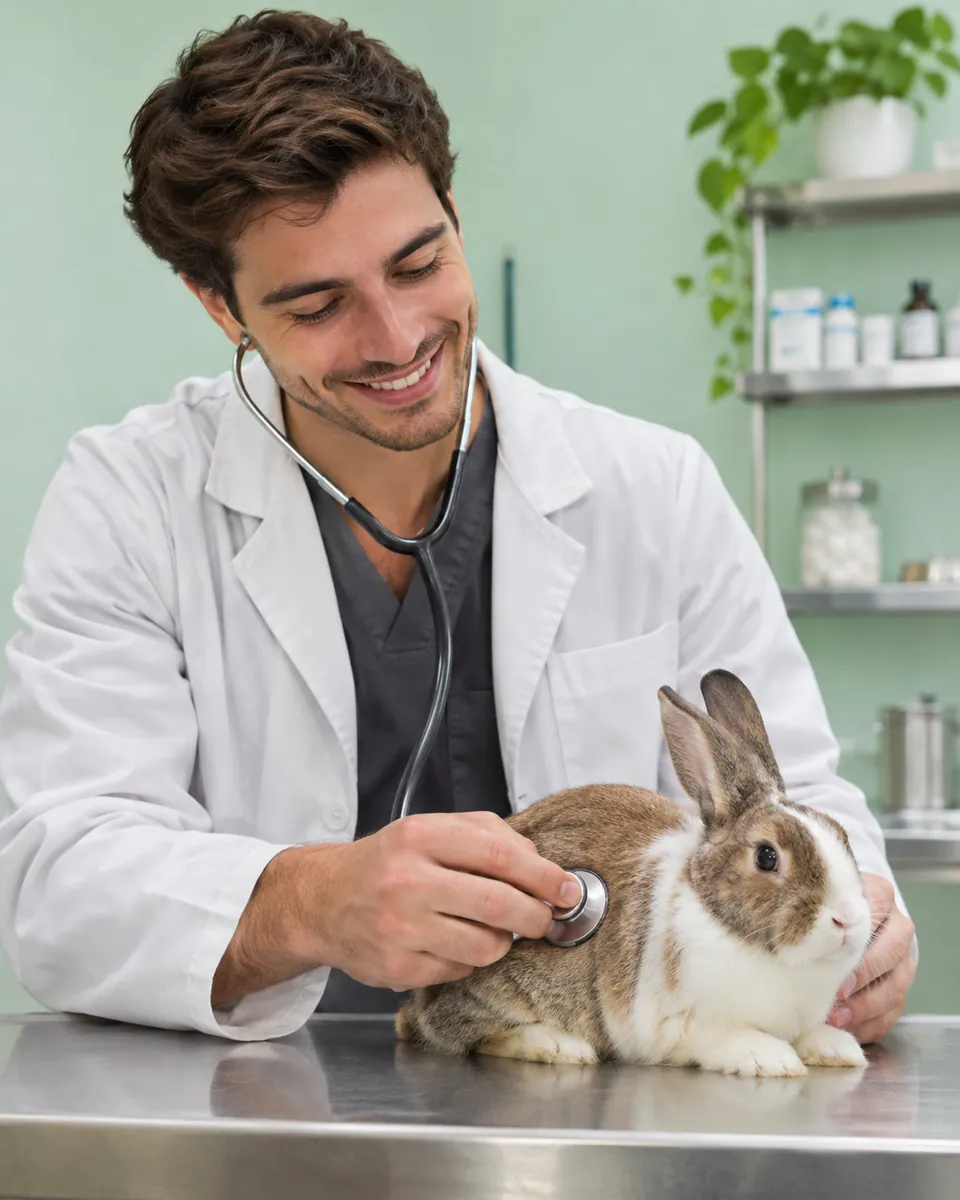
How to get a veterinary license in Colorado
The Colorado State Board of Veterinary Medicine (Department of Regulatory Agencies, Division of Professions and Occupations) licenses veterinarians in Colorado. DVM or equivalent from an AVMA-accredited school (official transcript or dean's letter), or graduation from a non-approved school plus an ECFVG or PAVE certificate (Rule 1.8(A)(2); C.R.S. 12-315-107). Applicant must be at least 21. Every applicant passes the North American Veterinary Licensing Examination (NAVLE). There is no separate Colorado examination beyond the NAVLE.
Demonstrate current clinical competency by one of: AVMA-accredited DVM within the past 12 months; ECFVG or PAVE certificate within 12 months; active licensed clinical practice at least 3 of the past 5 years; teaching in an AVMA program 3 of 5 years; military veterinary service 3 of 5 years; NAVLE passed within the past year; or a Board pre-approved evaluation at an AVMA-accredited institution (Rule 1.8(A)(3)(c)). Disclose any acts that would be grounds for discipline and any prior or pending discipline. Application documents must arrive within one year or the file is destroyed (Rule 1.8(A)(1)).
Background check: Not found: neither C.R.S. 12-315-107 nor Rule 1.8 requires fingerprints or a criminal history check. Applicants must self-disclose acts that would be grounds for discipline and any discipline in other jurisdictions.
Fees: Not published outside DORA's Online Services application forms: no fee schedule PDF, fiscal note or Legislative Council memo states a current veterinarian license fee, and third-party figures conflict. The only official figures found are obsolete or partial (a $150 endorsement fee on a 2003 paper form; a $40 per cycle peer-assistance component in the 2022 fiscal note for HB22-1235, marked an estimate). Check the fee at the DORA Online Services application or renewal screen.
Graduates of non-accredited programs: Graduates of non-approved (non-AVMA-accredited) schools submit an official ECFVG or PAVE certificate of completion in lieu of transcripts (Rule 1.8(A)(2)(b)); a certificate earned within the past 12 months also satisfies the clinical competency requirement.
Apply through DPO Online Services (Veterinarian - Original License by Examination, Endorsement or Telehealth). DPO states fees are listed on the application forms inside Online Services; no public fee schedule was readable. Separate academic license exists for faculty at a Colorado AVMA-accredited school (C.R.S. 12-315-108; Rule 1.8(C)) and is limited to university duties. Board rules current version effective 05/30/2026 (4 CCR 727-1).
Apply through the board's application page. You can confirm any Colorado license on the board's license lookup.
Already licensed in another state
Colorado issues licenses by endorsement to veterinarians who already hold a license elsewhere. C.R.S. 12-315-109 grants endorsement under the occupational credential portability program (C.R.S. 12-20-202(3)): licensed in good standing in another state, territory or federally, with substantially equivalent credentials or at least one year holding a current valid license in a jurisdiction with a substantially similar scope. Rule 1.8(B): applicant certifies no revoked, suspended, restricted or conditional license and no pending discipline; verifies through the endorsing state that the Rule 1.8(A)(2) requirements (accredited degree or ECFVG/PAVE, NAVLE after Nov 2000) are met; and meets the clinical competency options in Rule 1.8(A)(3) (for most relief vets, 3 of the past 5 years in active licensed clinical practice). DPO requires license verification from every U.S. jurisdiction where the applicant is or was licensed. Fee: Not published outside the DORA Online Services application; see the application fee note.
HB26-1198 (signed 04/29/2026, effective 01/01/2027) directs the Board to adopt rules to expedite licensure by endorsement and remove duplicative requirements; expect rulemaking before or during 2027. Fee not published on a readable official page.
Temporary and relief permits
Colorado has no temporary or relief permit. Plan on holding a full Colorado license before your first shift there. The 2020 emergency temporary veterinarian license under Executive Order D 2020 038 expired 12/31/2020 and no longer exists. Academic license (C.R.S. 12-315-108) is limited to university employment and is not a relief permit. Colorado is not in a veterinary licensure compact.

How to renew a veterinary license in Colorado
Colorado licenses renew every 2 years, expiring October 31 of even-numbered years (current cycle expires 10/31/2026); all veterinarian licenses share the same date. Renewal opens roughly 4 to 6 weeks before expiration. The renewal fee is Not published outside the DORA Online Services renewal screen; the only official figure found is a $40 per cycle veterinarian peer-assistance component in a 2022 fiscal note, marked an estimate. Late renewal: 60-day grace period after expiration (through 12/31 of the renewal year) to renew with a delinquency fee set by the DPO director (C.R.S. 12-20-202(1)(e)); after that the license is expired and must be reinstated. Reinstatement within 2 years: show CE for the last active period and the expired period; more than 2 years: meet the clinical competency options in Rule 1.8(A)(3)(c). Board fining schedule for practicing on an expired or inactive license: $0 for 0 to 12 months, $500 for 1 to 2 years, $1,000 for 2 or more years (Rule 1.16(A)(4)). The 60-day statutory grace after the October 31, 2026 expiration runs to December 30, 2026, with a delinquency fee; after that, reinstatement.
Inactive or retired status: Inactive status available (C.R.S. 12-315-111; Rule 1.8(E)): no CE while inactive, but must still renew every two years and pay the inactive renewal fee; no practice allowed. Reactivation requires an application and reactivation fee, CE for the last active and inactive periods if inactive under 2 years, clinical competency showing if 2 or more years, plus the substance use prevention training. Academic licensees cannot go inactive.
Renewal fee amount is shown only on the renewal form in DPO Online Services (DPO: fees are on the respective applications and forms). Since July 1, 2024 renewal includes an attestation of compliance with PDMP registration under C.R.S. 12-280-403(2)(a) (C.R.S. 12-315-110(4)) and an attestation of substance use prevention training or exemption (Rule 1.8(J)(5)). Renewal fee waived while on active military duty (C.R.S. 12-315-110(2)).
Renew online through the board's renewal portal.
Colorado veterinary continuing education requirements
Colorado requires 32 hours of continuing education per 2-year renewal cycle. Online or self-study: None stated in C.R.S. 12-315-110(3) or Rule 1.8(I); distance learning is expressly acceptable for the substance use prevention training (Rule 1.8(J)(2)). Up to 16 of the 32 hours may be non-biomedical topics (leadership, personnel management, client relations, communication, wellness); promotional presentations are not accepted. Required topics: 2 hours of jurisprudence on the Colorado Veterinary Practice Act and at least 1 hour of substance use prevention training per renewal (for the October 31, 2026 renewal: 32 hours with those two topics). A 2-hour supervision and delegation training was added in the October 15, 2025 rule version, and the Board clarified in April 2026 that it first applies to the 2028 renewal (period November 1, 2026 to October 31, 2028). SB26-138 (signed June 2, 2026, effective August 12, 2026) repeals the 12-30-114 mandate and enacts 12-315-110(3)(d) to (f): veterinarians must complete at least 1 hour of substance use prevention training per renewal, adding veterinary benzodiazepine prescribing as a topic, with the same two exemptions and Board rules to follow.
Approved providers: The Board automatically accepts any RACE-approved course (AAVSB Registry of Approved Continuing Education) and reserves the right to approve other meetings, programs or courses (Rule 1.8(I)(3)).
First renewal: If the renewal date falls in the calendar year of original Colorado licensure, no CE is required for the first renewal; if it falls the year after original licensure, 16 hours are required (Rule 1.8(I)(2)). DPO phrases this as licensed 12 months or less: none; more than 12 but less than 24 months: 16 hours.
Carryover: Not allowed: continuing education hours may only be applied to one renewal period (Rule 1.8(I)(1)).
Audits: Licensees attest to CE and substance use training at renewal; the Board may audit compliance and may request documentation (Rule 1.8(J)(6)). DPO instructs licensees to keep their own CE records (certificate, transcript or provider notice) for at least 4 years.
Statutory basis C.R.S. 12-315-110(3): 32 hours biennially including 2 hours jurisprudence, up to 16 hours non-biomedical. Inactive licensees are exempt while inactive. Rule versions read: October 15, 2025 and May 30, 2026 (official Colorado SOS Code of Colorado Regulations).
Controlled substances
Prescribing or dispensing controlled substances requires a federal DEA registration at each location where you handle them. State registration in Colorado: No. No separate Colorado controlled substance registration or fee for veterinarians: under C.R.S. 18-18-302 the State Board of Veterinary Medicine licenses and registers its own practitioners, so the Colorado veterinary license plus federal DEA registration is what is needed (medium confidence; no DPO page confirming this was readable). PDMP: veterinarians are prescribers under C.R.S. 12-30-109(4)(f); every DEA-registered prescriber must register and maintain a Colorado PDMP user account (C.R.S. 12-280-403(2)(a), 12-280-403(2)(a)), and since July 1, 2024 veterinarians attest to that registration at renewal (C.R.S. 12-315-110(4)). SB 24-047 (effective June 6, 2024) repealed 12-30-109(4)(f), so veterinarians are no longer 12-30-109 'prescribers', and repealed 12-315-126; the mandatory PDMP query exemptions for veterinarians now sit in 12-280-404(4)(a) and (4)(a.5), and the PDMP account duty rests on 12-280-403(2)(a) plus the renewal attestation in 12-315-110(4). Veterinarians may (not must) query the PDMP about a client or patient when they suspect the client of drug abuse or animal mistreatment (C.R.S. 12-280-404(3)(c)). Substance use prevention training (1 hour per renewal) is required under C.R.S. 12-30-114 and Rule 1.8(J).
Working relief in Colorado as an independent contractor
Most relief veterinarians are independent contractors, not employees of the hospitals they cover. You hold your own Colorado license, choose which shifts to take, set your own rate, and can work for as many hospitals as you like. That independence is what makes relief work attractive, and it also changes the paperwork: nothing is withheld from what you are paid, the forms that arrive in January are different, and taxes are paid as you go.
How you are paid and what gets reported
On CoverVet the hospital pays CoverVet for the shift and CoverVet pays you, so you are paid by one company rather than by each hospital. If what you earn through CoverVet in a year reaches the federal reporting threshold, you receive one Form 1099-NEC from CoverVet that covers every shift, no matter how many hospitals you worked. For payments made after December 31, 2025 the threshold is $2,000, up from $600, under the 2025 federal tax law, and it is indexed for inflation after 2026. Below the threshold you still owe tax on the income; only the form changes.
Self-employment tax and quarterly payments
As a contractor you pay both halves of Social Security and Medicare through self-employment tax, 15.3 percent of net earnings up to the annual Social Security wage base and 2.9 percent above it, and you deduct half of it when you figure income tax. Because nothing is withheld, the IRS expects estimated payments four times a year on Form 1040-ES, due in April, June, September and January. Paying in at least what you owed last year, or 90 percent of what you will owe this year, keeps you clear of the underpayment penalty.
Expenses a relief vet can usually deduct
Ordinary and necessary business costs come off the top: professional liability insurance, license and renewal fees, DEA registration, continuing education and the travel to get to it, mileage between hospitals on a day you work more than one, equipment and scrubs, and the self-employed health insurance deduction if you buy your own coverage. A SEP-IRA or solo 401(k) lets you set aside far more for retirement than an employee plan. The 20 percent qualified business income deduction may apply too, with income limits that bite earlier for health professions. A CPA who works with veterinarians earns their fee on this list.
Colorado specifics
State tax and classification notes for Colorado are being reviewed.
This section is general information about how relief work is usually structured, not tax or legal advice for your situation.
Frequently asked questions
How often do I renew a veterinary license in Colorado?
Colorado veterinary licenses renew every 2 years, expiring October 31 of even-numbered years (current cycle expires 10/31/2026); all veterinarian licenses share the same date. Renewal opens roughly 4 to 6 weeks before expiration. The renewal fee is Not published outside the DORA Online Services renewal screen; the only official figure found is a $40 per cycle veterinarian peer-assistance component in a 2022 fiscal note, marked an estimate.
How many CE hours does Colorado require for veterinarians?
32 hours per 2-year cycle. Required topics: 2 hours of jurisprudence on the Colorado Veterinary Practice Act and at least 1 hour of substance use prevention training per renewal (for the October 31, 2026 renewal: 32 hours with those two topics). A 2-hour supervision and delegation training was added in the October 15, 2025 rule version, and the Board clarified in April 2026 that it first applies to the 2028 renewal (period November 1, 2026 to October 31, 2028). SB26-138 (signed June 2, 2026, effective August 12, 2026) repeals the 12-30-114 mandate and enacts 12-315-110(3)(d) to (f): veterinarians must complete at least 1 hour of substance use prevention training per renewal, adding veterinary benzodiazepine prescribing as a topic, with the same two exemptions and Board rules to follow.
Does Colorado require a state exam in addition to the NAVLE?
No. Colorado relies on the NAVLE; there is no separate state examination (No Colorado jurisprudence or state exam appears in C.R.S. 12-315-107 or Board Rule 1.8. The only jurisprudence requirement is 2 CE hours on the Practice Act each renewal period. NAVLE must have been passed after November 2000 (Rule 1.8(A)(2)(c)); scores transfer through the AAVSB.).
Can an out-of-state veterinarian work relief shifts in Colorado on a temporary permit?
No. Colorado has no permit an out-of-state veterinarian can use for relief shifts; you need a full Colorado license, which can be issued by endorsement if you already hold one elsewhere.
Does Colorado license veterinarians by endorsement or reciprocity?
Yes. C.R.S. 12-315-109 grants endorsement under the occupational credential portability program (C.R.S. 12-20-202(3)): licensed in good standing in another state, territory or federally, with substantially equivalent credentials or at least one year holding a current valid license in a jurisdiction with a substantially similar scope. Rule 1.8(B): applicant certifies no revoked, suspended, restricted or conditional license and no pending discipline; verifies through the endorsing state that the Rule 1.8(A)(2) requirements (accredited degree or ECFVG/PAVE, NAVLE after Nov 2000) are met; and meets the clinical competency options in Rule 1.8(A)(3) (for most relief vets, 3 of the past 5 years in active licensed clinical practice). DPO requires license verification from every U.S. jurisdiction where the applicant is or was licensed. Fee: Not published outside the DORA Online Services application; see the application fee note.
Will I get a W-2 or a 1099 for relief shifts in Colorado?
Relief veterinarians are usually independent contractors, so you receive a Form 1099-NEC rather than a W-2 and nothing is withheld. On CoverVet one 1099-NEC from CoverVet covers every shift you worked, at every hospital, once your earnings reach the federal threshold.
Sources
- 4 CCR 727-1 Veterinarian and Veterinary Technician Rules and Regulations, current version effective 05/30/2026 (Colorado Secretary of State, official CCR) (CE hours, required topics, first renewal, RACE, non-biomedical cap, no carryover; accessed 2026-11-24)
- 4 CCR 727-1 Rule 1.8(I)(1)(a) to (c) (Mandated CE subjects; accessed 2026-11-24)
- 4 CCR 727-1 Rule 1.8(I)(2) and (3) (First renewal exemption and RACE acceptance; accessed 2026-11-24)
- 4 CCR 727-1 Rule 1.8(A)(2) (Degree, ECFVG/PAVE and NAVLE requirements; accessed 2026-11-24)
- 4 CCR 727-1 Rule 1.8(A)(3)(c)(3) (Clinical competency option used by most endorsement applicants; accessed 2026-11-24)
- 4 CCR 727-1 Rule 1.8(B) Licensure by Endorsement (Endorsement conditions; accessed 2026-11-24)
- 4 CCR 727-1 Rule 1.8(D)(2) Regulation of Military Spouses (Only temporary veterinary license; duration and fee waiver; accessed 2026-11-24)
- 4 CCR 727-1 Rule 1.8(E) and (H) (Inactive status, biennial renewal; accessed 2026-11-24)
- 4 CCR 727-1 Rule 1.8(J) Substance Use Prevention Training (Substance use training topics, attestation, audit; accessed 2026-11-24)
- 4 CCR 727-1 Rule 1.16(A)(4) Fining Schedule (Fines for practicing on an expired or inactive license; accessed 2026-11-24)
- Colorado Secretary of State CCR version history for 4 CCR 727-1 (Current version effective date and rulemaking history; accessed 2026-11-24)
- SOS eDocket 2025-00316, permanent rule adopted 08/14/2025, effective 10/15/2025 (Rulemaking that implemented HB24-1047 and Proposition 129 (source of the supervision CE requirement); accessed 2026-11-24)
- C.R.S. 12-315-110 License renewal - waiver - rules - continuing education (public.law mirror of the 2024 C.R.S., current through Fall 2025) (Statutory CE minimum (32 hours biennially, 2 hours jurisprudence, up to 16 nonbiomedical), military fee waiver, PDMP attestation at renewal from July 1, 2024; verified against the enrolled act SB 24-047 and the current statute; accessed 2026-11-24)
- C.R.S. 12-315-109 License by endorsement (public.law mirror) (Endorsement authority via occupational credential portability program; accessed 2026-11-24)
- C.R.S. 12-20-202 Renewal, expiration, reinstatement, portability program, military spouse temporary credential (public.law mirror) (60-day grace period and delinquency fee; reinstatement after 2 years; portability conditions; military spouse temporary license; accessed 2026-11-24)
- C.R.S. 12-315-105 License requirements and exceptions (public.law mirror) (Out-of-state veterinarian consulting exception; no relief exemption; accessed 2026-11-24)
- C.R.S. 12-315-108 Academic license (public.law mirror) (Academic license is not a relief permit; accessed 2026-11-24)
- C.R.S. 12-30-109 Prescriptions, PDMP registration, prescriber definition (public.law mirror) (Veterinarians are prescribers; DEA-registered prescribers must hold a PDMP account; verified against the enrolled act SB 24-047 and the current statute; accessed 2026-11-24)
- C.R.S. 12-280-404 PDMP program operation and access (public.law mirror) (Veterinarian permissive PDMP query for suspected client drug abuse or animal mistreatment; opioid query mandate for practitioners; verified against the enrolled act SB 24-047 and the current statute; accessed 2026-11-24)
- C.R.S. 12-30-114 Demonstrated competency, substance use prevention training (public.law mirror) (Substance use training topics, exemptions, hour cap; accessed 2026-11-24)
- C.R.S. 18-18-302 Controlled substances registration requirements (public.law mirror) (No separate state controlled substance registration for veterinarians; boards register their own practitioners; accessed 2026-11-24)
- SB24-047 Prevention of Substance Use Disorders, signed and effective 06/06/2024 (Colorado General Assembly) (Veterinarian exemption from human-patient PDMP mandates; accessed 2026-11-24)
- DORA PDMP Training, Legislative Update Notice, 08/09/2024 (DORA description of SB24-047 veterinarian exemption; accessed 2026-11-24)
- HB26-1198 Access to Veterinary Care, signed 04/29/2026, effective 01/01/2027 (Colorado General Assembly) (Pending endorsement streamlining rulemaking; accessed 2026-11-24)
- DORA bulletin New Law Affects Veterinarians (HB25-1285), 06/16/2025 (VPA registration effective 01/01/2026 context; accessed 2026-11-24)
- Colorado State Board of Veterinary Medicine homepage (DPO; site blocks automated fetches, text taken from search engine snippet of the official page) (Expiration date, grace period, board contact; accessed 2026-11-24)
- DPO Veterinary Licensing Services (search snippet of official page) (Even-year October 31 expiration; renewal window; accessed 2026-11-24)
- DPO Veterinary CE page (search snippet of official page) (Recordkeeping duration, first renewal phrasing; accessed 2026-11-24)
- DPO Veterinary Applications and Forms (search snippet of official page) (Where fees are published; endorsement verification requirement; accessed 2026-11-24)
- DPO Temporary and Emergency Licensure Information (search snippet of official page) (2020 emergency temporary veterinarian license has expired; accessed 2026-11-24)
- Colorado Division of Professions and Occupations Online Services, License Lookup (License lookup URL; accessed 2026-11-24)
Informational only, compiled from the sources above and reviewed November 24, 2026. Not legal advice. Boards change fees and rules; confirm with the Colorado State Board of Veterinary Medicine (Department of Regulatory Agencies, Division of Professions and Occupations) before you apply or renew.